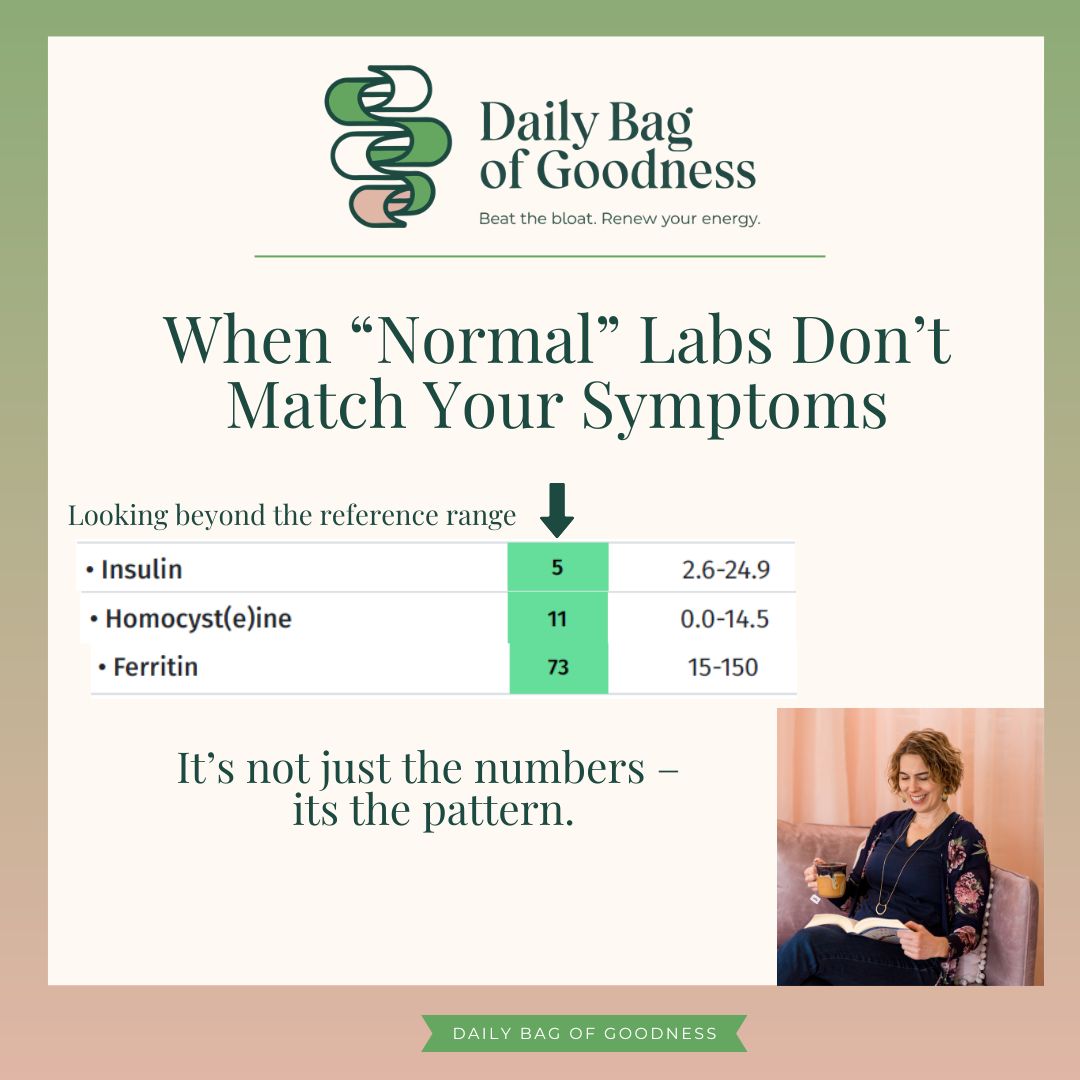
Patterns Over Individual Lab Values
When I review a client’s labs, I’m never looking at just one marker in isolation. What I’m really looking for are patterns that connect to what someone is feeling every day – like afternoon fatigue, mood shifts or digestive stress.
Looking at labs in this way often helps fill in the missing pieces of the puzzle that can easily be missed when results are viewed as individual numbers rather than part of a larger story.
Our bodies are complex system, and lab markers can offer helpful clues about how those systems are functioning together.
Lab Markers as Clues
Blood lab markers can provide valuable insight into how the body is regulating key processes like inflammation, nutrient status, energy production, and stress response.
While many markers may fall within a “normal” reference range, they can still offer meaningful information when viewed alongside symptoms and other lab values.
Let’s look at a few markers that are often included in routine labs but can sometimes provide deeper insight when we take a closer look.
Four Markers That Can Offer Important Insight
Fasting Insulin
Often provides early insight into how the body is managing blood sugar and energy regulation. Elevated glucose levels are the body’s whisper that it’s working harder to maintain balanced blood sugar levels.
Ferritin
Ferritin reflects the body’s stored iron and helps us understand whether the body has the iron reserves needed for oxygen delivery and energy production. It can also act as a marker of inflammation, and when levels are elevated, iron overload may contribute to oxidative stress in the body.
Vitamin D
Vitamin D influences far more than immune health. It also plays a role in mood regulation, metabolic health, and inflammatory signaling within the body.
Homocysteine
Homocysteine can provide clues about methylation pathways and B-vitamin status, which are involved in processes like detoxification, cardiovascular health, and nervous system support.
Recognizing Patterns
When these markers are looked at together, they can often revel patterns and help explain why someone might still feel unwell despite having labs that appear “normal”.
For example, certain combinations can start to reveal what body systems need more support.
higher insulin + low ferritin -> energy imbalance & fatigue
lower vitamin D + high homocysteine -> nutrient insufficiency or nutrient absorption challenges
high insulin + higher ferritin -> high oxidative stress and inflammatory patterns
These patterns help guide us on where to look next.
A Root-Cause Perspective
This is why I take a gut-first, root-cause approach to health.
When we understand how the body’s systems interact and influence one another, we can begin to see how supporting upstream systems often creates a positive cascade of downstream support throughout the body.
Lab markers are just one part of that process. The most meaningful insights come from pairing lab data with deeper conversations about symptoms, lifestyle patterns, and a client’s health history.
When we bring all of these pieces together, we can start to understand what the body may need most. From there, I’m able to create personalized recommendations that support lasting and sustainable change.
Have you ever reviewed lab work that looked “normal” but still didn’t explain how you were feeling?
I’d love to hear your experience.
P.S. If you’re feeling unsure where to start, I offer free discovery calls. It’s simply a conversation to help you decide what support might make sense for you.
This is not medical advice and not intended to treat or cure any disease or affliction. Please consult your medical professional before utilizing the techniques and tools listed above.
Leave a Reply